The document
The proof a visitor looks for before they will fill anything in
People decide very quickly whether a business is real. Reviews, a visible security signal and some form of verifiable authority are what they check, usually without noticing they are checking.
Six sections covering which signals matter, where on the page they belong, and how the same evidence feeds Google’s own quality framework and the AI engines that cite businesses.
What is inside
Six sections, from the missing signals to the install
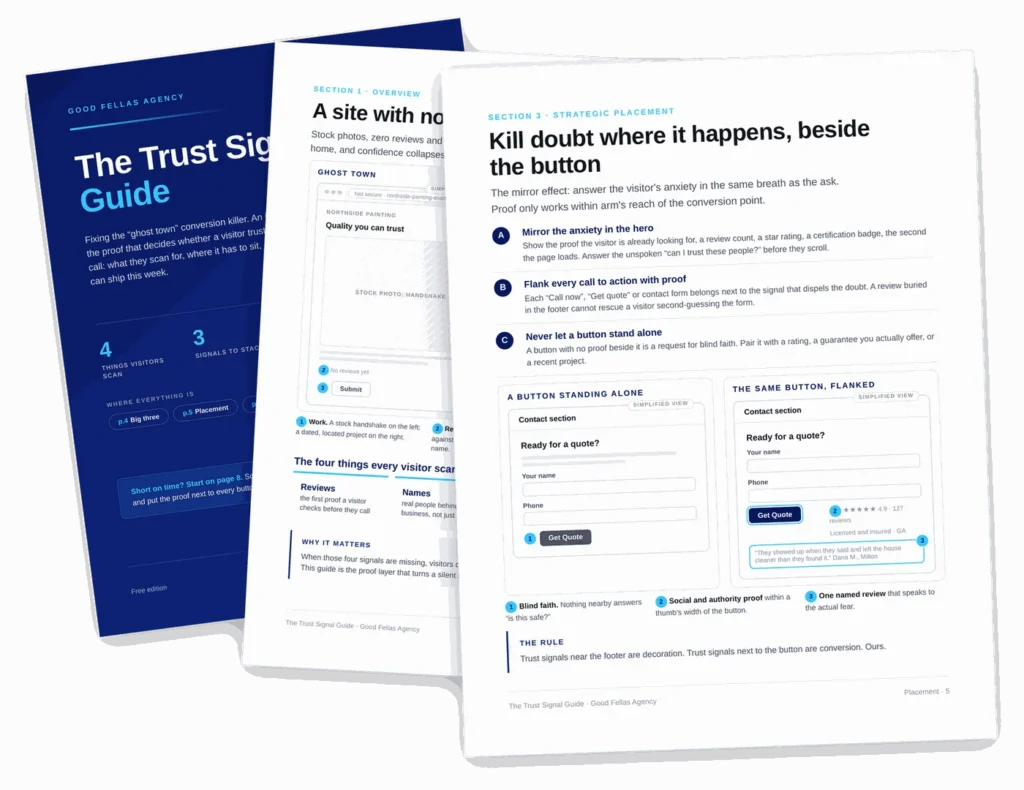
The guide is specific about placement, because the same proof in the wrong position does very little.
What an unverified site looks like
Stock photography, no reviews and no visible security signal read as nobody being home, and confidence drops on sight.
Three signals no visitor ignores
Social proof, security proof and authority proof, with a concrete target for each rather than a general instruction.
Placement, not decoration
Address the hesitation where it happens: in the hero, and beside every button. Proof in the footer is decoration.
Quality signals and AI citations
How real names, locations and genuine reviews give Google’s quality framework and AI engines something they can verify.
A worked case study
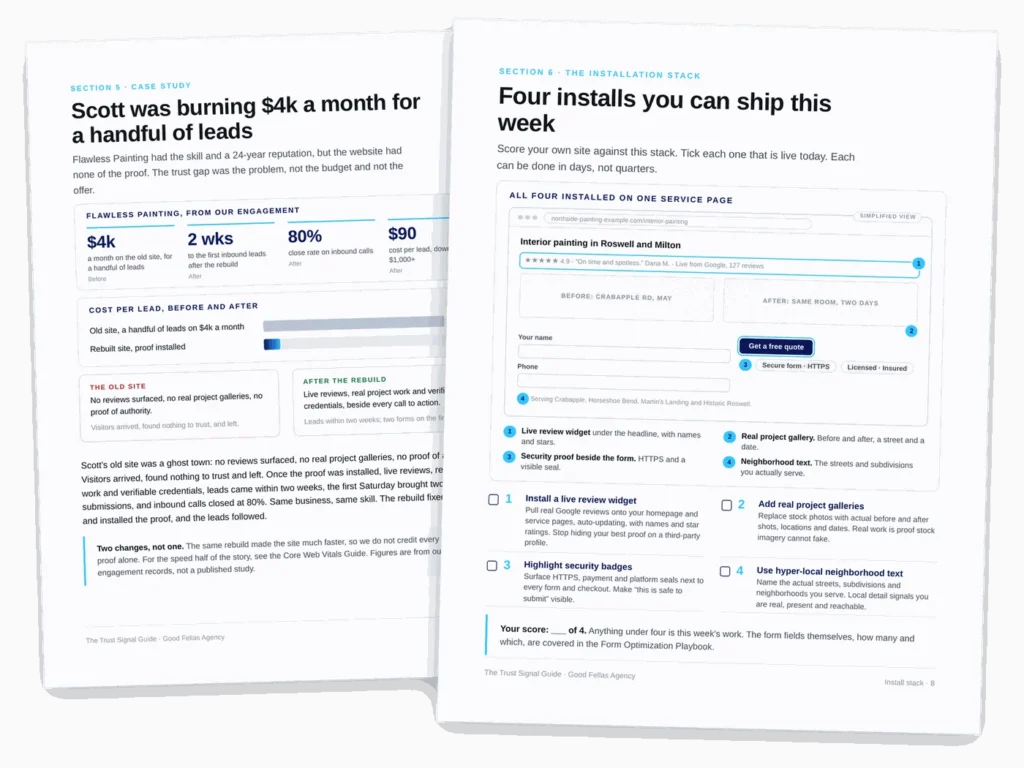
A contractor moving from significant monthly ad spend with no leads to inbound enquiries within two weeks, on trust changes alone.
The installation stack
Four measurable installs: a live review widget, real project galleries, visible security badges and local targeting.
A few of the fixes
Six installs from the guide
Each is a visible change on the page rather than a background improvement.
The numbers behind it
What the research says
Before you ask
Questions people send us about this one
What counts as a trust signal?
The proof points a visitor scans before converting: reviews, real names and locations, a visible security signal, and certifications or accreditations. They are checked quickly and largely unconsciously, which is why placement matters as much as having them.
Which three belong above the fold?
Social proof in the form of live reviews, security proof such as a visible certificate or payment seal, and authority proof such as accreditations or awards. Together they are the minimum package, and the guide gives a target for each.
Where should proof actually sit?
Next to the point of conversion. Address the hesitation in the hero and put proof beside every button. Trust signals in the footer are decoration, because by then the decision has usually been made.
Does any of this affect AI search?
Yes. Verifiable business names, locations and genuine reviews are the evidence that Google’s quality framework and the AI engines rely on to confirm a business is what it says it is. A site with no verifiable identity is difficult for them to cite.