The document
You inherited an account. Start by changing nothing.
An inherited account is a system that has been learning, from data that may be wrong, toward a goal that may not be yours. Changing fifteen things on the first afternoon resets the learning and removes your only way of knowing what worked.
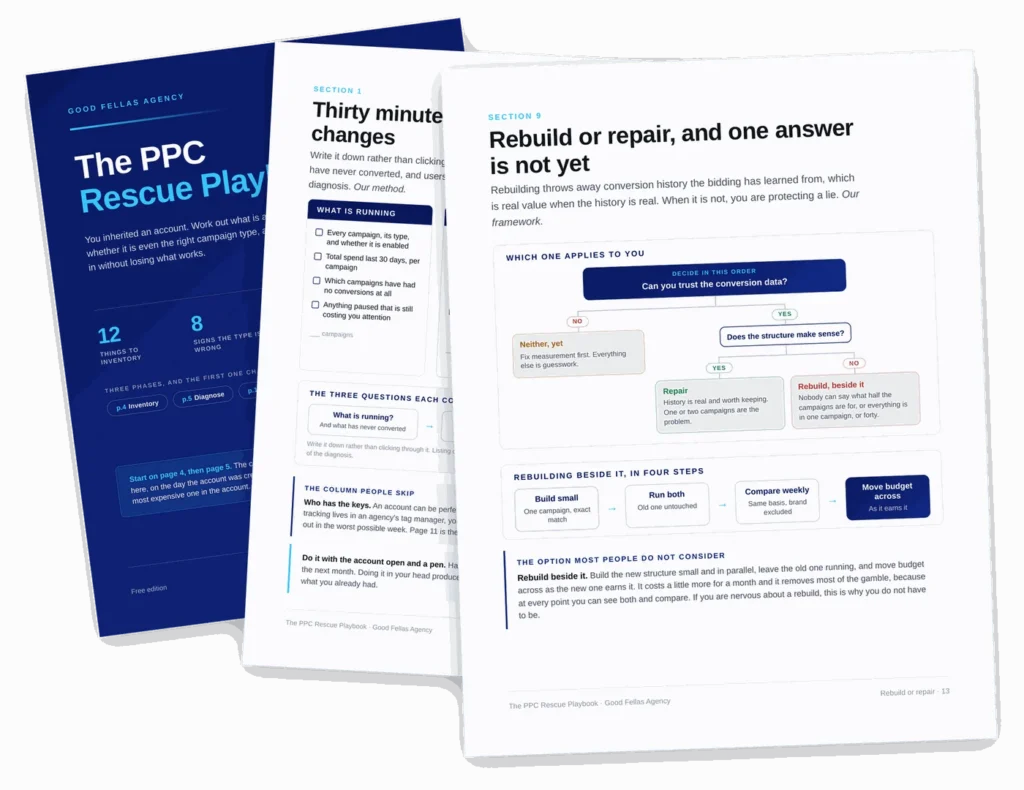
Seventeen pages: a thirty-minute inventory, the campaign type question asked properly, eight tells that the type is wrong, and a five-week order of operations that keeps your evidence intact.
What is inside
Nine sections, and two of them change nothing at all
Google’s own documentation describes each campaign type and the Performance Max behaviour quoted here. The inventory, the tells, the order of operations and the rebuild framework are ours.
The thirty-minute inventory
What is running, who has the keys, and what is being decided for you. Written down rather than clicked through, because the act of listing it is most of the diagnosis.
Are you running the right type?
Answer the decision tree as if the account did not exist, then compare. The type was chosen once, in four seconds, by somebody who is no longer here.
Eight tells the type is wrong
Including the three about Performance Max, with Google’s own sentences on why your Search impressions fell when it launched.
Can you trust the numbers?
An account optimising toward a bad conversion action has been getting better at the wrong thing, efficiently, for months. Six checks, and a ten-minute test that about half of accounts fail.
What an agency leaves behind
Manager account negative lists you cannot see into, auto-apply still running, conversion tracking in somebody else’s container. Six things, still shaping the account.
Rebuild or repair
Four answers, including the one most people never consider: rebuild beside it, keep the old one running, and move budget across as the new one earns it.
How it works
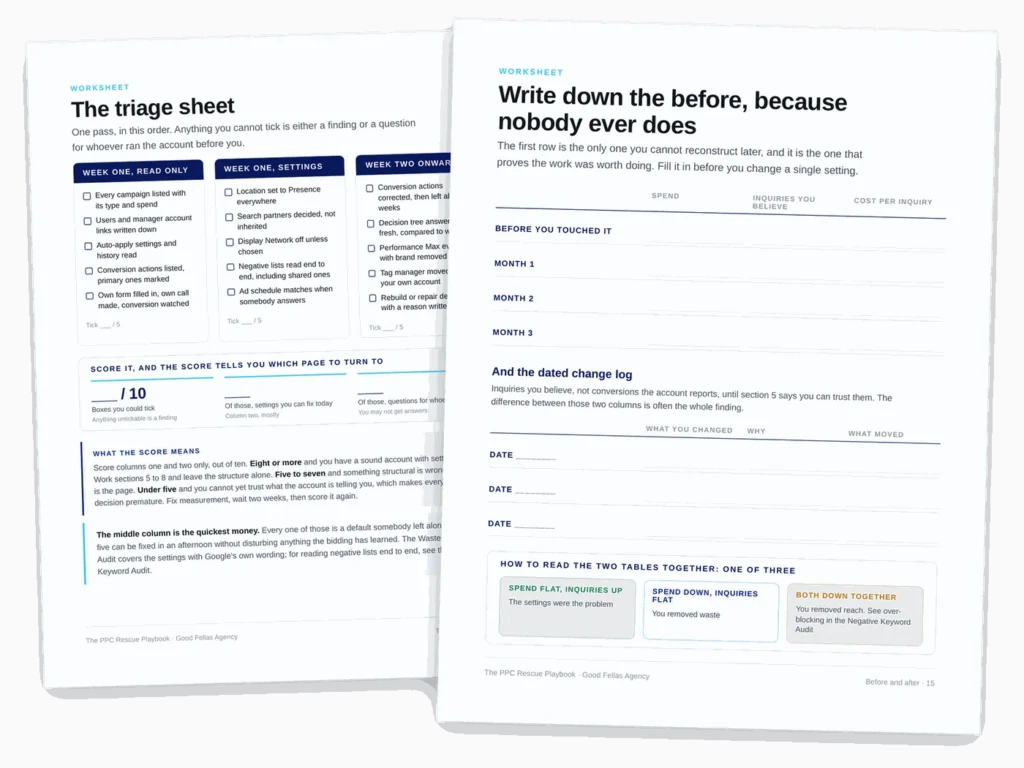
Five weeks, and the first one changes nothing
Every structural change resets what the bidding has learned. Do them in a batch and you will never know which one helped.
By the numbers
What you are getting
Before you ask
Questions people send us about this one
How is this different from your three audit documents?
Those go deep on one thing each: the searches you pay for, the settings underneath them, and what Google is suggesting and auto-applying next. This one is the order to use them in, plus the two questions they do not answer: is the campaign type right at all, and can you trust the conversion data the rest of it depends on.
The account looks terrible. Should I just start again?
Maybe, and there is a framework for deciding. Rebuilding throws away conversion history the bidding has learned from, which is real value when the history is real and a liability when it is not. There is also a third option most people miss: build the new structure in parallel, small, keep the old one running, and move budget across as the new one earns it.
My Search impressions dropped when Performance Max launched. Why?
Google states that Search campaigns containing an exact match keyword are prioritised to serve over Performance Max, that search themes carry the same priority as phrase and broad match, and that if your Search campaign is budget-limited, Performance Max may occasionally serve on exact match terms. That last sentence is usually the answer, and it is quoted in full in the playbook.
The previous agency still has access. Does that matter?
It matters most if your conversion tracking lives in their tag manager, because your measurement ends the day the relationship does. Move it into your own container before anything else, and certainly before any conversation about ending the arrangement. There are five other things on that list.