The document
Sort a keyword list by what the searcher actually wants
Ten pages and eight working frameworks for classifying every keyword by intent and buyer stage, so you can tell which terms attract buyers and which attract readers.
The data pull takes ten minutes and uses Search Console rather than a paid tool, which means you can run it on your own list this afternoon.
What is inside
Eight frameworks, from the intent spectrum to the trap detector
Volume is the easiest thing to measure and the least useful thing to sort by. Each framework here sorts by something closer to revenue.
The intent spectrum
Informational, navigational, commercial and transactional side by side, with the conversion rate each one tends to deliver.
The keyword intent matrix
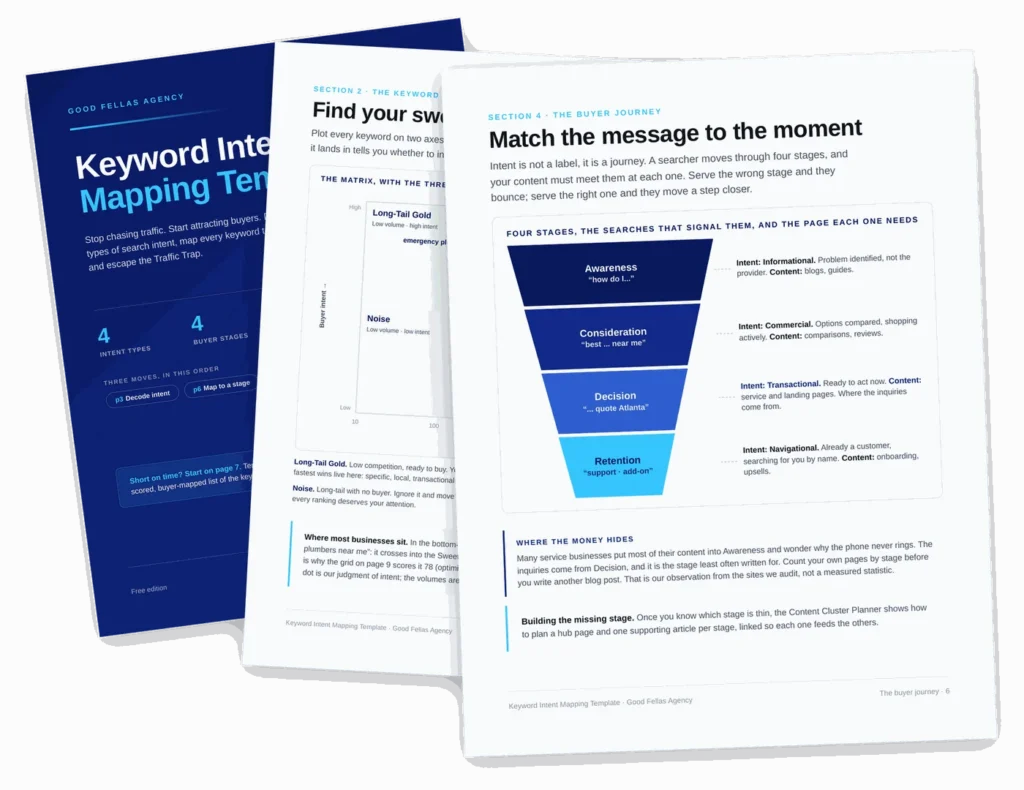
Volume against buyer intent in four quadrants: traffic trap, sweet spot, long-tail gold and noise. It makes the invest or cut decision obvious.
A worked comparison
Two keywords, same industry, same budget, very different outcomes. The gap between a content strategy and a revenue strategy in one example.
The buyer journey layer
Awareness, consideration, decision and retention, so the page a searcher lands on matches the moment they are in.
The ten-minute data pull
Export from Search Console, classify with a copy-paste AI prompt, map the results. Three steps, no paid tools.
The grid and the trap detector
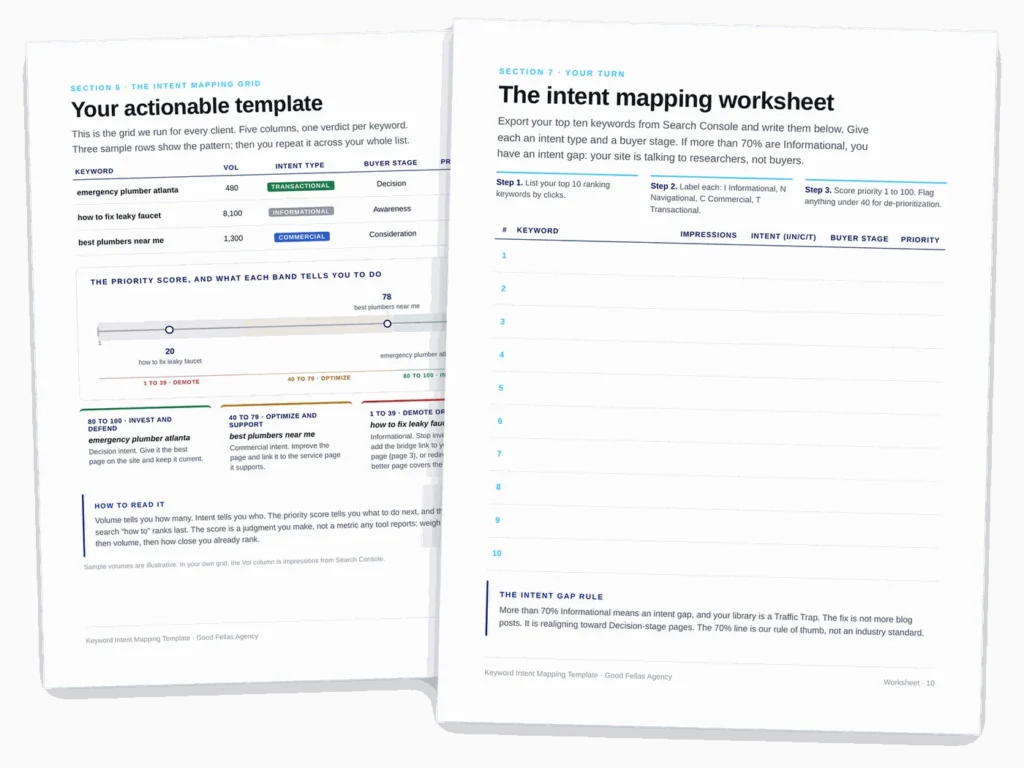
A five-column mapping grid, a fill-in worksheet for your top ten keywords, and a ten-point check for whether you are stuck in the traffic trap.
A few of the fixes
Six rules from the template
Each is a decision the grid makes for you once the keywords are classified.
The numbers behind it
What the research says
Before you ask
Questions people send us about this one
What is keyword intent mapping?
Classifying every keyword by search intent and matching it to a buyer-journey stage. It tells you which terms bring buyers and which bring readers, so budget goes to the terms that convert rather than the ones with the largest numbers next to them.
What are the four types of search intent?
Informational, where someone is researching and conversion sits around one to two percent. Navigational, where they are looking for a specific site. Commercial investigation, comparing options, around ten to fifteen percent. Transactional, ready to act, above twenty.
How do I know if I am stuck in the traffic trap?
The usual signs are a keyword profile that is mostly informational, blog posts outranking your service pages, and conversion under half a percent while rankings improve. The ten-point detector in the template scores it properly.
Do I need paid SEO tools?
No. The data pull uses Search Console, the classification uses a copy-paste prompt in any assistant, and the scoring happens in the grid. Paid tools make parts of it faster but nothing here depends on one.