
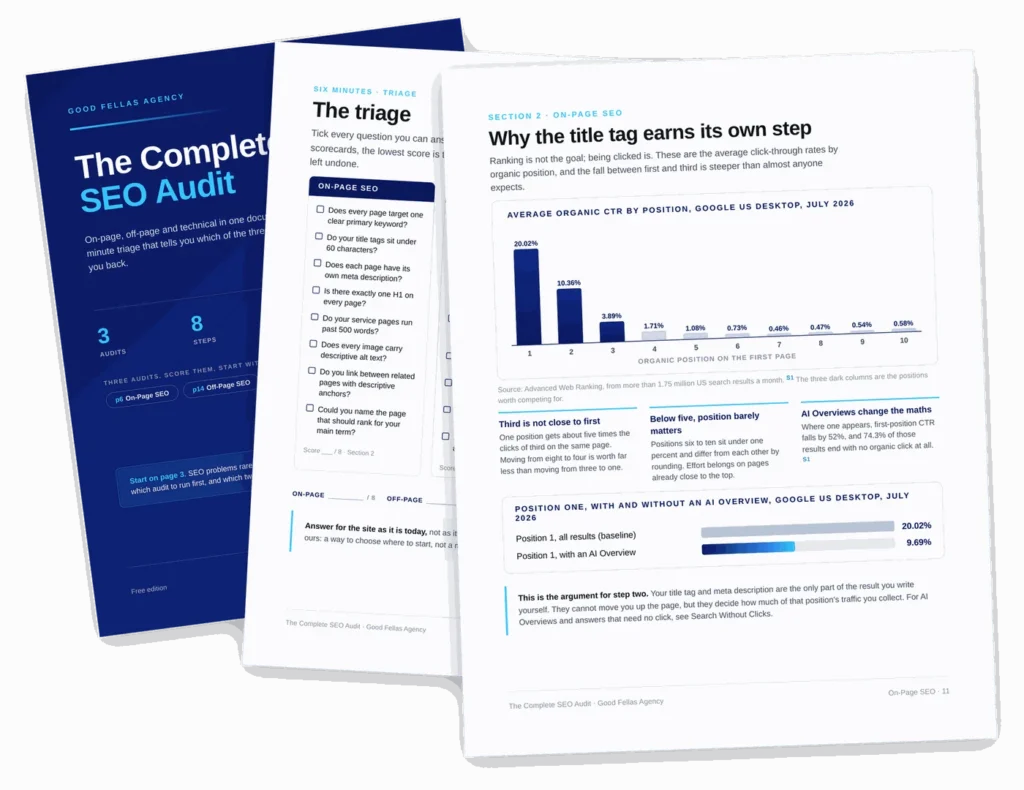
The document
On-page, off-page and technical, in one document and one order
Eighty nine checkpoints across three audits, written in the order a professional actually runs them rather than the order they are easiest to list. Each check says what good looks like, so a tick means something.
It opens on a six-minute triage. Twenty four questions tell you which of the three audits is costing you the most right now, and you run that one first.
What is inside
Three audits, and the reason they are kept apart
Most SEO checklists mix a title tag problem with a crawl budget problem and a backlink problem on the same page. They need different people, different tools and different amounts of time, so this document keeps them separate and tells you which to start with.
On-page
Keyword targeting, meta data, headings, content, internal linking, images, speed and mobile. Eight steps, each with the checks underneath it and a worked example.
Off-page
Links, mentions, citations and the signals you do not control directly. What is worth chasing, what is worth ignoring, and how to tell a good link from an expensive one.
Technical
Crawling, indexing, structured data, Core Web Vitals and the errors that quietly stop good pages ranking. The audit most sites have never had run on them.
The triage
Twenty four questions, answered in about six minutes, that score the three audits against each other so you know which to spend the week on.
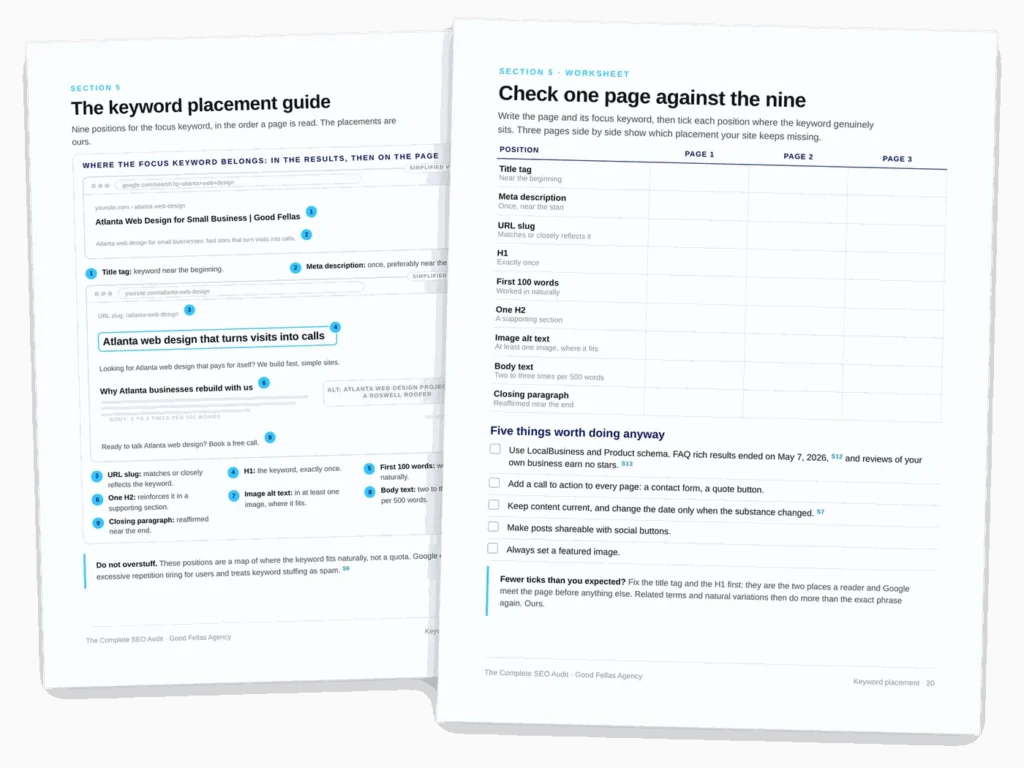
A worked page
One page taken through all eight on-page steps, with the before and the after, so the checklist has something to measure against.
What good looks like
Every check carries its target rather than just its name, with the source named wherever the target comes from published data.
How it works
Triage first, then one audit at a time
Running all three audits at once is how an audit becomes a document nobody acts on. The triage exists so that the first week of work goes where it will show.
By the numbers
What you are getting
Before you ask
Questions people send us about this one
Do I need paid tools to run it?
No. Every check names where the answer comes from, and the document is built so that Search Console, Analytics and a browser cover the majority of it. Where a paid tool makes a check faster we say so, and we also say what to do without one.
How is this different from a free audit tool?
A tool returns a score and a list of errors sorted by its own severity model. This sorts by what is costing you, which depends on your site and your market, and it explains what each check is for so you can decide rather than obey.
How long does the full audit take?
The triage is six minutes. A single audit is an afternoon for a small site. Running all three properly is a week, which is exactly why the triage exists.
Is any of it out of date?
It was written against the current guidance, including the move from FID to INP in Core Web Vitals and the removal of FAQ rich results from general search. Anywhere Google has changed something recently the document says what changed and when.


